
Choosing an access control system for your business in Dubai is not as straightforward as picking a product from a catalogue. The wrong system for your building type, team size, or risk environment will cost you more to fix than it would have cost to get right the first time.
This guide is written for business owners, facility managers, and operations teams in Dubai who are buying or upgrading an access control system and want to make an informed decision — not just the cheapest one or the most technically impressive one.
We cover every major system type, how biometric and door access control systems compare, what questions to ask before you buy, and how to integrate your system with professional security support for a complete solution.
Quick Summary
- Door access control systems use keycards, PIN codes, or smart locks to manage who enters a building or room
- Biometric access control systems use fingerprints, facial recognition, or iris scans — the most secure option available
- The right system depends on your building type, number of users, security risk level, and budget
- In Dubai, all security operations must comply with SIRA regulations — your provider must be licensed
- Technology alone is not enough — professional security personnel paired with the right system delivers the strongest result
What Is a Door Access Control System?
A door access control system is any technology-based solution that manages and restricts who can open a door, gate, or barrier at a specific location. Instead of relying on a physical key — which can be copied, lost, or transferred — an access control system uses credentials that are either electronic, digital, or biometric.
In Dubai, door access control systems are standard across corporate offices, residential towers, hotels, warehouses, construction sites, and event venues. The level of complexity varies significantly — from a single keypad at an office entrance to a multi-site system managing hundreds of doors across a corporate campus.
At its core, a door access control system answers one question at every entry point: is this person allowed to be here, right now?
The system checks the credential, verifies it against its database, and either opens the door or denies access — logging the attempt either way. That audit trail is one of the most valuable features of any modern access control system: it creates a complete record of who accessed which area and when.
If you want a broader foundation before diving into system types, the post on what access control in security actually means covers the principles in detail.
What Is a Biometric Access Control System?
A biometric access control system identifies people using physical characteristics that are unique to each individual — most commonly fingerprints, facial features, or iris patterns. Unlike a keycard or PIN code, a biometric credential cannot be shared, borrowed, lent, or forgotten. It is always with the person it belongs to.
This makes biometric access control systems the most secure option available for high-risk environments. They are standard in:
- UAE government buildings and data centres
- Financial institutions and banks
- Pharmaceutical and healthcare facilities
- Server rooms and IT infrastructure zones
- High-security residential and corporate facilities
Why biometric access control is growing in Dubai:
Dubai is home to a significant number of free zone businesses, financial institutions, and high-value commercial operations. As the city’s business environment has grown more sophisticated, so has demand for access control systems that cannot be defeated by a lost card or a shared PIN. Biometric systems address this directly.
The UAE’s broader smart city agenda — which includes Smart Dubai initiatives and Vision 2031 — has also accelerated the adoption of biometric technology across both public and private sector buildings.
Types of Door Access Control Systems Compared
Before choosing a system, it helps to understand what each type offers and where it falls short. Here is a direct comparison:
| System Type | How It Works | Security Level | Best For | Weakness |
|---|---|---|---|---|
| PIN / Keypad | User enters a code | Low–Medium | Small offices, internal doors | Codes can be shared or observed |
| RFID Keycard | Card is tapped or swiped | Medium | Offices, hotels, car parks | Cards can be lost, cloned, or shared |
| Smart Card | Encrypted chip card | Medium–High | Corporate offices, secure facilities | Cards still require physical control |
| Biometric (Fingerprint) | Fingerprint scan | High | Offices, warehouses, healthcare | Sensor degradation in dusty environments |
| Biometric (Face Recognition) | Camera-based face scan | High | High-traffic entrances, lobbies | Performance can vary with lighting |
| Biometric (Iris) | Iris pattern scan | Very High | Data centres, government, banking | Higher cost; slower throughput |
| Mobile / Smartphone | Bluetooth or NFC from phone | Medium–High | Flexible workspaces, events | Dependent on battery and phone security |
| Hybrid | Combines two or more methods | Very High | All high-security environments | Higher implementation cost |
No single system is right for every situation. Most Dubai businesses operating at mid-to-large scale use a combination — for example, RFID keycards for general floor access, with biometric fingerprint or facial recognition for server rooms, finance departments, or executive areas.
Biometric Access Control: Fingerprint, Face, and Iris
Fingerprint Access Control Systems
Fingerprint access control is the most widely deployed biometric technology in Dubai. It is mature, cost-effective, and fast — a typical fingerprint scan takes under a second. For offices, warehouses, and healthcare facilities, fingerprint systems provide a significant security upgrade over keycard-only setups.
Key considerations for fingerprint systems in Dubai:
- Dusty or outdoor environments can affect sensor accuracy over time — look for IP65-rated or higher weatherproof units for outdoor or industrial use
- Hygiene concerns — in healthcare settings, contactless alternatives like facial recognition may be preferable
- Database size — large facilities with hundreds of enrolled users need systems with sufficient processing capacity to maintain fast response times
Fingerprint access control is among the most requested options for access control system installations in Dubai across corporate and industrial clients.
Facial Recognition Access Control Systems
Facial recognition has moved from specialist technology to mainstream access control in a short period of time. Modern systems are fast, contactless, and can process multiple faces in a high-traffic entry environment without creating a queue.
Advantages in a Dubai context:
- Contactless operation — no touching required, which matters in post-pandemic operational planning
- Fast throughput at high-traffic entrances such as hotel lobbies, corporate reception areas, and event venues
- Can be combined with temperature screening in healthcare and hospitality environments
- Works with existing CCTV infrastructure in some configurations
Limitations to be aware of:
- Performance can be affected by poor lighting, face coverings, or extreme angles
- Higher initial cost than fingerprint systems
- Data privacy considerations around facial data storage — ensure your provider follows UAE data protection regulations
Iris Recognition Access Control Systems
Iris recognition is the most accurate biometric technology available and is largely immune to the environmental factors that affect fingerprint and facial recognition systems. It is also the most expensive and the slowest in terms of throughput.
Iris systems are appropriate for environments where security cannot be compromised under any circumstances — central bank vaults, government data infrastructure, pharmaceutical cold stores, and similar high-security facilities. For most commercial applications in Dubai, fingerprint or facial recognition delivers sufficient security at a more practical cost and speed.
Smart Door Access Control Systems: What Makes Them Different?
A smart door access control system connects to your network — either via cloud or on-premises server — allowing remote management, real-time monitoring, and integration with other building management systems. This is the standard for modern commercial installations in Dubai.
What makes a system “smart”:
- Remote access management — add or remove users, change access levels, and lock or unlock doors from anywhere via a web portal or mobile app
- Real-time alerts — instant notification when a door is forced, held open too long, or accessed outside permitted hours
- Access scheduling — set doors to unlock automatically at certain times (e.g. main entrance 7am–7pm) and lock otherwise
- Visitor management integration — pre-register visitors so their access is automatically activated when they arrive and deactivated when they leave
- Audit trail — every access event is logged with time, date, credential used, and door location
- Multi-site management — manage access across multiple locations from a single dashboard
For businesses operating across multiple floors, buildings, or sites in Dubai — or for companies with high staff turnover where credential management is ongoing — a smart door access control system is the only practical choice.
RFID and Smart Card Access Control Systems
RFID (Radio Frequency Identification) and smart card systems are the most common access control technology in Dubai’s commercial market. They are cost-effective, reliable, and easy to manage at scale.
How they work:
A card or fob contains a chip or antenna. When held near a reader, it transmits a unique identifier that the system checks against its database. If the credential is authorized, the door opens. If not, access is denied and the attempt is logged.
Key differences between RFID and smart cards:
| Feature | RFID Card | Smart Card |
|---|---|---|
| Data storage | ID number only | Encrypted data + ID |
| Cloning risk | Higher | Lower (encryption protects data) |
| Cost | Lower | Higher |
| Security level | Medium | Medium–High |
| Common use | Hotels, car parks, general office | Corporate offices, secure facilities |
Practical considerations for Dubai businesses:
- Card management — lost cards must be deactivated immediately. Smart systems allow remote deactivation in seconds
- Visitor cards — temporary visitor credentials can be issued and set to expire automatically after the visit
- Integration — RFID systems integrate well with HR databases, allowing automatic activation and deactivation of credentials when staff join or leave
Turnstile and Barrier Gate Access Control Systems
Turnstile and barrier gate systems add a physical layer to access control — they prevent tailgating (one credential used to allow multiple people through) which is one of the most common ways electronic access control is defeated.
Types used in Dubai:
Flap barrier / speed gate — used in corporate lobbies, DIFC offices, and high-traffic entrances. Fast, presentable, and effective at preventing tailgating without creating a bottleneck.
Full-height turnstile — maximum physical restriction, used at construction sites, industrial facilities, and high-security perimeters where forced entry must be prevented.
Tripod turnstile — cost-effective and compact, used at smaller access points, parking facilities, and secondary entrances.
Barrier gate / boom gate — standard for vehicle access control at car parks, compounds, and industrial sites. Often combined with RFID transponders or license plate recognition cameras.
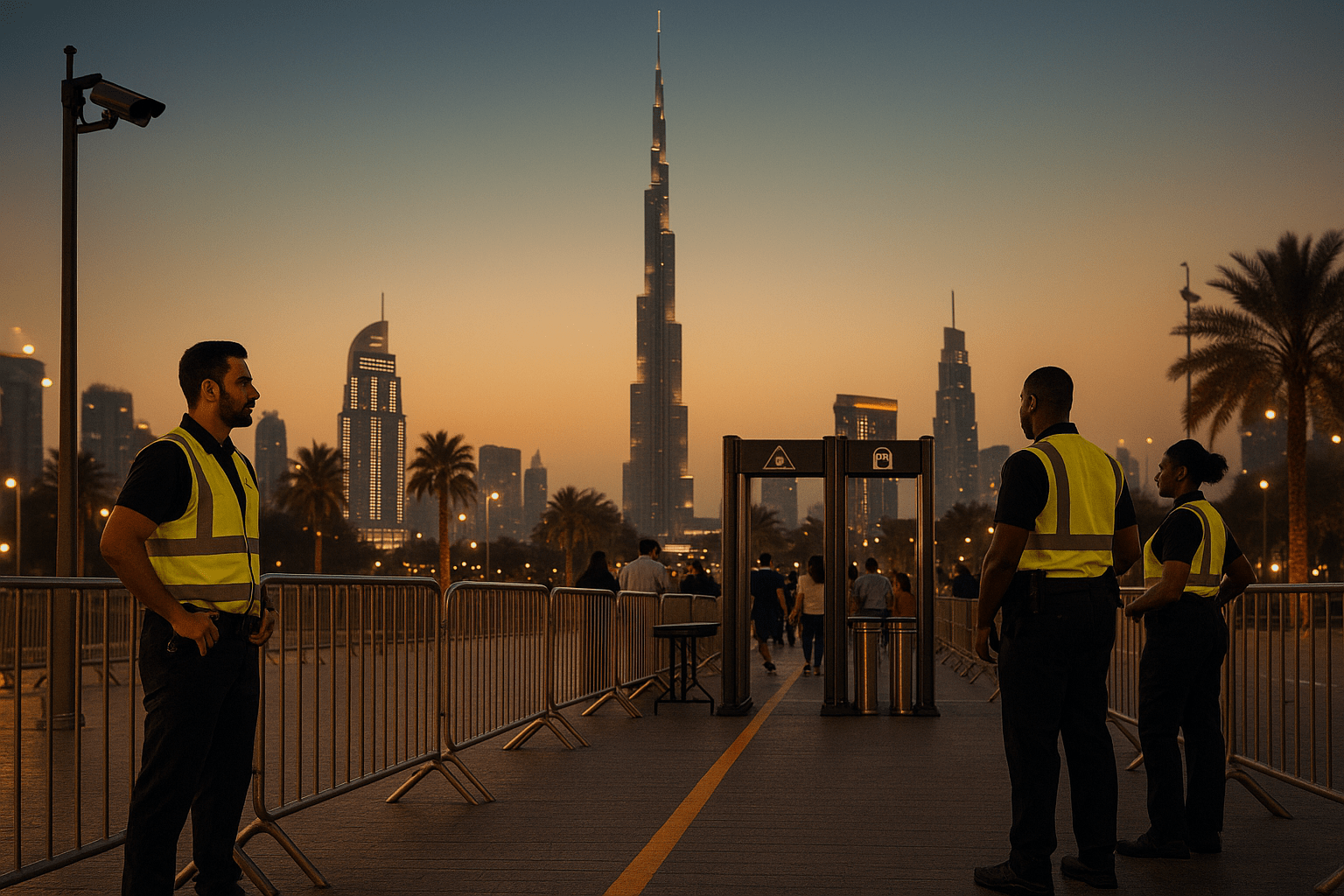
For Dubai businesses where high footfall and security must coexist — particularly in DIFC, Business Bay, and DWTC areas — flap barrier systems paired with facial recognition or smart card readers offer the cleanest combination of security and guest experience.
Elevator Access Control Systems
Elevator access control is often overlooked in the early stages of planning but is one of the most effective ways to manage vertical movement within a building. It ensures that authorized people can only access the floors they are permitted to use — preventing visitors from wandering beyond reception and contractors from reaching restricted areas.
How it works:
A reader is installed inside the elevator cab. To select a restricted floor, the user must present a valid credential — keycard, biometric, or mobile. Without it, the floor button does not activate. The elevator takes them only to floors they are authorized to visit.
Where elevator access control adds real value in Dubai:
- Mixed-use towers — residential and commercial floors in the same building, where residents and office staff should not have access to each other’s floors
- Corporate headquarters — executive floors, server rooms on dedicated floors, and finance departments all benefit from elevator-level access restriction
- Hotels — ensuring guests can only access their room floor and common areas, not other guest floors or staff areas
- Healthcare facilities — restricting patient access to clinical areas and protecting pharmacy and records floors
How to Choose the Right Access Control System for Your Business in Dubai
This is the section most buyer’s guides skip or rush through. Here is a structured approach:
Step 1: Map Every Entry Point
Walk every door, gate, barrier, and access point in your facility. Include fire exits, service doors, loading bays, basement entrances, and roof access. Every point that could allow unauthorized entry needs to be in your plan.
Step 2: Define Your Access Zones
Divide your facility into zones by sensitivity:
- Public zone — reception, lobby, visitor areas
- General staff zone — offices, common areas, meeting rooms
- Restricted zone — finance, HR, IT, server rooms
- High-security zone — safes, data centres, executive areas
Each zone needs a defined access level. Not every employee needs access to every zone.
Step 3: Assess Your Risk Level
A distribution warehouse has different risks to a law firm or a hotel. Consider:
- Value of assets on-site
- Sensitivity of data held in the building
- Number of visitors and contractors
- History of security incidents
- Regulatory requirements for your industry
Step 4: Choose Your Credential Type
Based on your risk assessment:
- Low risk, small team — keypad or RFID keycard is sufficient
- Medium risk, office environment — smart card with remote management
- High risk, sensitive data — biometric fingerprint or facial recognition
- Very high risk, regulated industry — hybrid biometric with guard presence
Step 5: Decide Between Cloud and On-Premises
| Cloud-Based System | On-Premises System | |
|---|---|---|
| Management | Remote, via web portal | Local server, on-site management |
| Updates | Automatic | Manual |
| Cost | Subscription model | Higher upfront, lower ongoing |
| Data control | Data held by provider | Data held on-site |
| Reliability | Dependent on internet connection | Works without internet |
| Best for | Multi-site businesses, growing teams | High-security facilities, regulated industries |
Step 6: Plan for Integration
Your access control system does not operate in isolation. Plan from the start how it will connect with:
- CCTV and surveillance
- Intruder alarm systems
- HR and visitor management software
- Security guard operations
- Building management systems (BMS)
An integrated system where all components share data gives your security team a single operational picture — far more effective than separate systems running in parallel.
Access Control System Installation in Dubai: What to Expect
A professional access control system installation in the UAE follows a structured process:
1. Site survey — a qualified team visits your facility to assess entry points, cable routes, power availability, and integration requirements. This should happen before any quote is finalised.
2. System design — the provider produces a detailed plan showing every reader, controller, and door hardware component, along with the software configuration and integration points.
3. Hardware installation — readers, controllers, electric locks, door hardware, and cabling are installed by certified technicians. Cable routes and hardware positions should be agreed before work begins to minimise disruption.
4. Software configuration — user credentials are enrolled, access levels are set, and schedules are programmed. This is the most time-consuming step for large facilities.
5. Testing and commissioning — every door, credential, and access level is tested before the system goes live. Failed access attempts, alarm triggers, and audit logging should all be verified.
6. Training — administrators need to know how to add and remove users, generate reports, respond to alerts, and handle common issues. End users need to know how to use their credentials correctly.
7. Ongoing support — access control systems require maintenance, software updates, and periodic audits of user credentials. Confirm what ongoing support your provider includes.
For businesses in Dubai that have experienced access control failures in the past, the installation process — particularly the site survey and system design phase — is where most problems start. Do not rush it.
Access Control System Integration: CCTV, Alarms, and Security Guards
A door access control system is significantly more effective when it is integrated with the rest of your security infrastructure. Here is how each integration adds value:
CCTV integration When an access event is logged — whether a successful entry or a failed attempt — the system can automatically pull up the CCTV footage from that door at that moment. This eliminates the manual search process and speeds up incident investigation dramatically. Night surveillance services that combine CCTV monitoring with access control data give security teams complete visibility of after-hours activity.
Intruder alarm integration When a door is forced or held open beyond its time limit, the access control system can trigger an alarm automatically. Guards are alerted immediately rather than discovering the breach later during a log review.
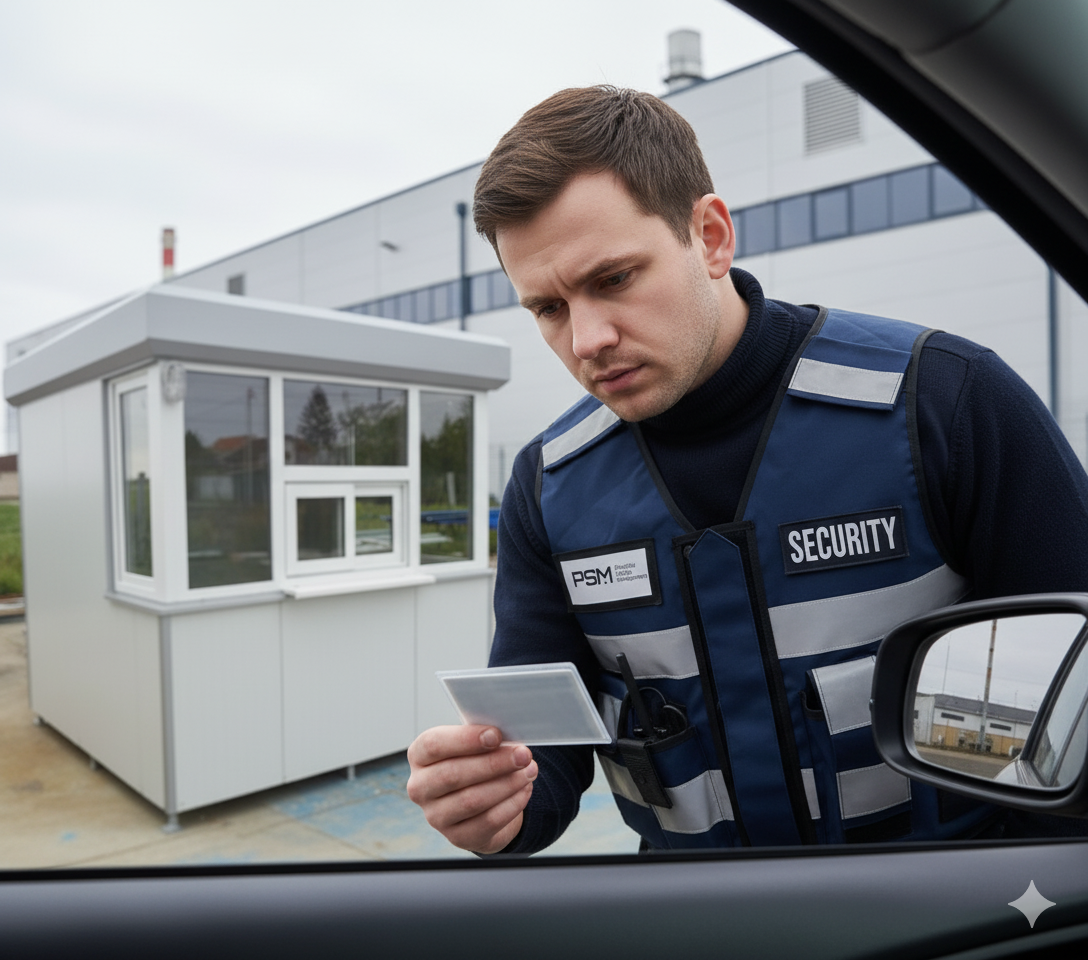
Security guard integration Guards are the human decision-makers that no access control system can replace. They handle tailgating, social engineering, suspicious behavior, and emergency response in ways that technology cannot. For full coverage — particularly at high-risk entry points — access control services that combine electronic systems with trained, SIRA-licensed guards deliver the strongest result.
Door security services At entrances where customer or guest experience matters — hotels, restaurants, premium retail, corporate reception — door security services pair a professional security presence with the electronic system, managing the human side of access control while the technology handles verification.
Drone surveillance For large sites with extensive outdoor perimeters — industrial facilities, construction sites, event venues — drone surveillance covers ground that would require many guards on foot, feeding live imagery to the control room and extending the reach of your access control operation beyond the physical entry points.
Access Control for Different Business Types in Dubai
Corporate Offices
Dubai’s corporate market — particularly in DIFC, Business Bay, DWTC, and JLT — demands access control systems that are professional in appearance, fast in operation, and capable of managing a complex mix of permanent staff, hot-desk users, visitors, and contractors.
Recommended approach:
- Smart card or facial recognition for main entrance
- Flap barrier or speed gate for lobby throughput
- Elevator access control for floor restriction
- Visitor management integration for pre-registered guests
- 24/7 remote monitoring capability
Hotels and Hospitality
Hotel access control in Dubai must balance security with the guest experience. A system that is too slow or too demanding will affect guest satisfaction. A system that is too permissive will create security vulnerabilities.
Recommended approach:
- RFID keycard for guest room access (industry standard)
- Facial recognition or smart card for staff and back-of-house areas
- Elevator access control to restrict guests to their floor and common areas
- Integration with hotel hospitality security operations
Construction Sites
Construction sites in Dubai present unique access control challenges. The workforce changes daily, multiple contractors are on-site simultaneously, restricted zones shift as work progresses, and access points may be temporary.
Recommended approach:
- Turnstile at main site entrance with biometric enrollment at induction
- RFID wristbands or cards for daily credential management
- Zone-based access for restricted areas (electrical, structural, hazardous materials)
- Integration with construction site security services for guard presence at key points
Residential Buildings and Compounds
Residents expect smooth, frictionless access to their home while knowing that unauthorized visitors cannot enter. The access control system must serve both needs simultaneously.
Recommended approach:
- Smart card or mobile access for residents
- Intercom with camera for visitor verification at main entrance
- Barrier gate with RFID for vehicle access
- Porter or reception desk as the human layer — see porter services for how this works in practice
Warehouses and Industrial Facilities
Warehouses in Dubai’s logistics zones — Jebel Ali, Dubai South, DIP — typically handle high-value goods and require strict control over who enters which zone of the facility.
Recommended approach:
- Full-height turnstile at perimeter entry
- Biometric fingerprint for high-value storage areas
- Vehicle barrier gate with RFID transponder for delivery vehicles
- CCTV integration across all access points
- Property protection services for 24/7 guarded perimeter support
SIRA Compliance and Legal Requirements in Dubai
Any access control operation in Dubai that involves security personnel must comply with SIRA — the Security Industry Regulatory Agency requirements. This means:
- The security company managing the access control operation must hold a valid SIRA company license
- All security guards deployed at access points must hold a valid SIRA security card
- Operations must comply with SIRA standards for training, conduct, and reporting
For the technology side — installing readers, controllers, and door hardware — standard UAE construction and electrical regulations apply. Your installation contractor should hold the appropriate trade licenses.
For businesses in regulated industries — financial services, healthcare, government contractors — additional compliance requirements may apply. The UAE’s data protection law (Federal Decree-Law No. 45 of 2021) is relevant for biometric data collection: you must have a lawful basis for collecting biometric data and must store and process it in accordance with the law’s requirements.
For a complete overview of what SIRA compliance means for your business, the post on SIRA regulations in Dubai covers the key requirements.
Common Mistakes Dubai Businesses Make When Buying Access Control Systems
1. Choosing the system before mapping the building The system must fit the building — not the other way around. A system specced without a proper site survey will have gaps, over-engineered areas, and integration problems from day one.
2. Ignoring tailgating Even the best electronic access control system can be defeated by someone following an authorized user through an open door. Turnstiles, speed gates, or guard presence at high-risk entry points are the only effective solutions.
3. Not planning for credential management A system with 200 active credentials that includes 40 former employees, 15 expired contractors, and 10 lost cards is a security liability. Plan your credential review process before you go live.
4. Treating technology as a replacement for guards Electronic systems cannot exercise judgement, respond to emergencies, or handle the unexpected. They are most effective when paired with professional security personnel — not used instead of them.
5. Buying on price alone The cheapest access control system in Dubai is rarely the right one. Low-cost hardware often means limited integration capability, poor technical support, and faster hardware degradation in the UAE’s heat and dust environment.
6. Not testing before going live Every door, every credential, every access level, and every alert trigger should be tested before the system goes live. Discovering failures on day one with real users is far more disruptive and costly than thorough pre-launch testing.
7. Skipping the audit log review process An access control system generates a log. If nobody reads it, the log is just storage. Build a regular audit process — weekly for high-security areas, monthly at minimum for standard facilities.
8. Not planning for failure What happens when the system goes offline? When a reader fails? When the server loses power? A failsafe plan — whether that is a manual override procedure, a backup guard station, or a secondary system — should be documented before it is needed.
For real examples of how these mistakes play out in UAE facilities, the post on UAE access control failures covers documented cases and the lessons they offer.
PSM UAE: Access Control Services in Dubai and Across the UAE
PSM UAE is a SIRA-licensed security company with over 14 years of experience providing access control services across Dubai, Abu Dhabi, and the wider UAE. Their approach combines professional security personnel with electronic and biometric access control systems — delivering the human judgement and the technological infrastructure that a complete access control operation requires.
PSM works across all major business environments in Dubai:
- Corporate offices — visitor management, credential systems, and trained guards at entry points
- Construction sites — worker credentialing, zone control, and integrated site security
- Residential buildings and compounds — resident access management, visitor control, and porter services at the front desk
- Hotels and hospitality — guest access, back-of-house restriction, and integration with hotel security operations
- Events and venues — temporary access control setups coordinated with event security services
- Warehouses and industrial facilities — high-security perimeter control and zone-based access management
PSM’s access control service is fully SIRA-compliant and integrates with CCTV, alarm systems, drone surveillance, and on-site security teams. Rather than selling hardware, PSM provides the security management that makes any access control system work — the trained personnel, the procedures, the monitoring, and the response capability.
Key Takeaways: Buying a Biometric or Door Access Control System in Dubai
Before you sign any contract or choose any system, work through this checklist:
- Map every entry point first — do not spec a system without a proper site survey
- Match the system to the risk level — biometric for high-security areas, RFID for general access, smart card for mid-tier environments
- Plan for integration — CCTV, alarms, HR systems, and security guards should all connect
- Do not ignore tailgating — physical barriers at high-risk points are essential
- Build a credential management process — regular audits keep the system secure over time
- Confirm SIRA compliance — any provider managing security personnel at your access points must be licensed
- Test everything before going live — no exceptions
- Pair technology with people — a biometric system managed by untrained staff is still a weak access control operation
The right access control system for your Dubai business is the one that fits your building, your team, your risk level, and your budget — supported by a professional, licensed security provider who knows how to make it work.
Frequently Asked Questions About Access Control Systems in Dubai
What is the best access control system for a Dubai office?
For most corporate offices in Dubai, a combination of smart card access for general areas and biometric fingerprint or facial recognition for restricted zones delivers the right balance of security, speed, and manageability. Pair it with a flap barrier or speed gate in the lobby and elevator access control for floor restriction.
How much does a biometric access control system cost in Dubai?
Costs vary based on the number of doors, the type of biometric technology, whether the system is cloud or on-premises, and the level of integration required. Contact a licensed provider like PSM UAE for a site-specific assessment and quote.
Do I need a security guard if I have a biometric access control system?
For most facilities, yes. Biometric systems verify credentials but cannot exercise judgement, handle emergencies, or prevent tailgating. A guard paired with a biometric system delivers significantly stronger access control than either alone.
What is the difference between a smart card and an RFID card?
An RFID card transmits a simple identifier that the reader checks against its database. A smart card contains an encrypted chip that stores more data and is significantly harder to clone. Smart cards offer higher security than standard RFID cards.
Can access control systems integrate with CCTV in Dubai?
Yes. Most modern access control management systems support CCTV integration, allowing security teams to automatically pull up camera footage linked to any access event. This is standard practice for professionally managed security operations.
What is a turnstile access control system?
A turnstile access control system adds a physical barrier to the credential verification process — preventing tailgating by ensuring only one person passes per verified credential. Flap barriers, full-height turnstiles, and tripod turnstiles are the most common types used in Dubai commercial and industrial settings.
Is biometric data collection legal in the UAE?
Yes, subject to compliance with the UAE’s data protection law (Federal Decree-Law No. 45 of 2021). Businesses collecting biometric data must have a lawful basis for doing so and must store and process the data in accordance with the law. Consult a legal advisor for advice specific to your industry and data type.
What does SIRA compliance mean for access control in Dubai?
SIRA licensing is required for all security companies and their personnel operating in Dubai. If your access control setup involves security guards, those guards and their employer must be SIRA-licensed. For more detail, see the guide on SIRA regulations in Dubai.