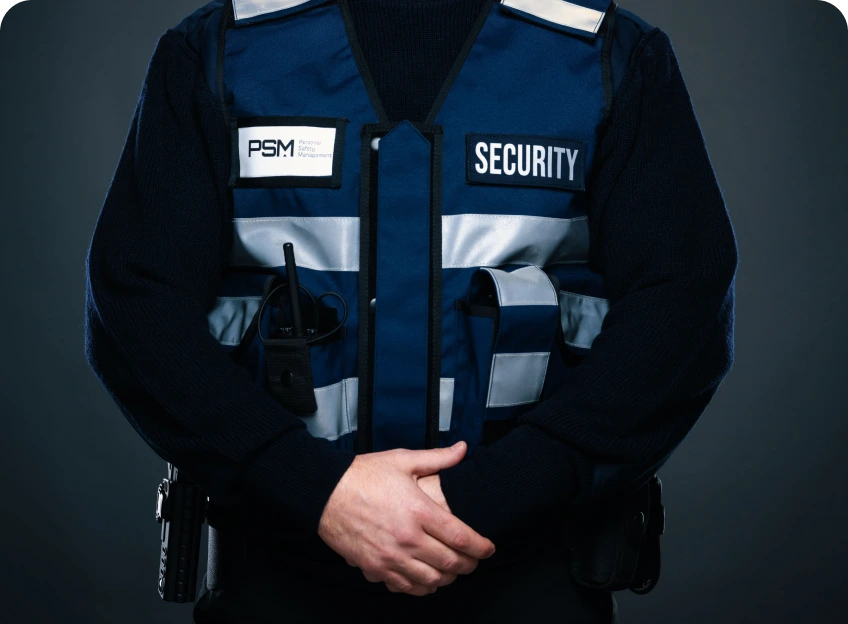

Most access control failures in the UAE do not happen because a facility skipped security entirely. They happen because a facility invested in the visible parts of security — the cameras, the barriers, the keycard readers — and assumed the job was done. It was not.
The gap between having an access control system and running an effective one is where most breaches occur. This article breaks down the most common failure points seen across UAE commercial properties, residential compounds, and industrial sites, and outlines the specific fixes that close them.
Failure 1: Treating Technology as a Substitute for People
This is the most widespread access control failure in the UAE market. A developer installs RFID readers at every entry point, deploys a CCTV network across the facility, and considers the perimeter secured. The technology is real. The security is not.
Electronic access systems verify credentials. They do not verify people. A keycard reader confirms that an authorised card was presented. It has no mechanism to confirm that the authorised cardholder is the person holding it. A stolen badge, a borrowed credential, or a tailgating individual following closely behind a legitimate entry — none of these trigger an alert. The system logs a clean entry and moves on.
Human judgement is what closes this gap. A trained guard positioned at a monitored entry point reads the environment in ways no sensor can. Mismatched credentials, nervous behaviour, unfamiliar faces during off-hours, vehicles that do not match visitor logs — these are the signals that prevent incidents before they happen.
The fix: Staff your primary access points with trained personnel. Technology should support the guard’s decision-making, not replace it. For facilities with multiple entry points, access control services should include both a manned checkpoint and an integrated electronic system working in parallel.
Failure 2: Incomplete Perimeter Coverage
A facility secures its main lobby with turnstiles, a staffed reception desk, and visitor management software. The back entrance next to the loading dock has a padlock. The fire exit on the second floor is propped open most afternoons because staff find it convenient.
This is not an unusual scenario — it is the norm on a significant proportion of commercial and industrial sites across Dubai and Abu Dhabi. The principle is straightforward: a perimeter is only as strong as its weakest, unmonitored point. Investing heavily in a front entrance while leaving secondary exits unmanaged does not create partial security. It redirects the threat.
Experienced individuals looking to gain unauthorised access to a facility will identify the path of least resistance. In most cases, that path is not the front door.
The fix: Map every entry and exit point in the facility — including service entrances, basement access, fire exits, and rooftop access where applicable. Each point requires an assigned security protocol: either a staffed position, an electronic control, or a monitored alarm. Any point that cannot be staffed full-time should be covered by a combination of CCTV monitoring and a scheduled patrol. Night surveillance is particularly important for secondary access points that see minimal daytime oversight.
Failure 3: Credential Management That Nobody Owns
Access credentials accumulate over the life of a building. A contractor is brought in for a fit-out. They receive temporary access cards for six weeks. The fit-out ends. The cards are not collected. Six months later, those credentials are still active in the system.
A member of staff is terminated. HR processes the paperwork. The employee’s physical badge sits in a drawer at their old desk. IT disables their email account the same afternoon. Nobody informs the security team. The badge remains functional.
This failure is not a technology problem. It is a process problem. Most modern access control systems are technically capable of deactivating a credential instantly. The issue is that no defined process exists to trigger that deactivation when a person’s status changes. The result is a facility carrying dozens — sometimes hundreds — of active credentials belonging to people who no longer have a legitimate reason to be there.
In the UAE context, this carries additional risk. Construction and development projects involve rotating subcontractors across long timelines. Free zone offices experience high staff turnover. Hotels and hospitality venues cycle through seasonal workers. Each transition creates a credential management gap if the process is not enforced.
The fix: Establish a formal offboarding protocol that includes immediate credential deactivation as a mandatory step — not an optional one. This protocol should be owned jointly by HR and the security team, with a defined escalation if either party fails to complete their step. Conduct a quarterly credential audit: every active access profile should be matched against a current, confirmed employment or contractor record. Any unmatched profile is deactivated immediately.
Failure 4: Access Zones That Are Too Broad
Many facilities assign access permissions on a binary basis: a person either has access or they do not. This approach is operationally simple but creates significant exposure. An employee with access to the building has access to every floor. A contractor authorised to service the HVAC system can walk into the server room.
Effective access control is compartmentalised. Different people have different legitimate reasons to be in different areas, and those distinctions should be reflected in the access system. A senior executive does not need access to the data centre. A maintenance contractor does not need access to the finance department after hours. The principle of least privilege — giving each person the minimum access required to do their job — reduces the blast radius of any single credential compromise.
| Role | Appropriate Access Scope |
|---|---|
| General office staff | Common areas, own floor, staff facilities |
| Senior management | Management floors, boardrooms, restricted meeting rooms |
| IT staff | Server rooms, network infrastructure zones |
| Maintenance contractors | Specific service areas during contracted hours only |
| Visitors and clients | Reception, designated meeting rooms |
| Security personnel | All monitored zones, control room |
The fix: Review and redefine access permissions by role rather than by individual. Implement time-based restrictions where relevant — a contractor authorised to work between 8 AM and 5 PM should not have a credential that functions at 11 PM. For high-security zones, require dual authentication: a credential plus a secondary verification step.
Failure 5: Guards Without Site-Specific Training
A facility contracts a security provider, personnel are deployed, and the assumption is made that trained guards will figure out the site. In practice, generic security training and site-specific operational knowledge are two different things.
A guard who does not know the facility’s floor plan cannot respond effectively to an incident in a restricted zone. A guard unfamiliar with the visitor management system will create bottlenecks at peak entry times and default to waving people through rather than holding up a queue. A guard who has not been briefed on which contractors are expected this week cannot make a reliable decision about an unexpected van at the loading bay.
Site familiarity is not a luxury. It directly affects the quality of every access control decision made at the front line.
The fix: Require a formal site induction for every guard deployed to your facility, regardless of their experience level. This should cover the physical layout, the access control technology in use, the daily schedule of expected contractors and deliveries, emergency protocols, and escalation procedures. For long-term deployments, run quarterly briefings to account for changes in the site layout, personnel, or operating procedures.
Failure 6: No Review of Access Logs
Most modern access control systems generate detailed logs: every entry, every exit, every failed attempt, timestamped and attributed to a credential. In a significant proportion of facilities, these logs are never reviewed unless an incident has already occurred.
An access log that is only examined retrospectively is a forensic tool, not a security tool. Regular log review transforms it into something more useful: an early warning system. Unusual access patterns — a credential used outside its normal hours, repeated failed attempts on a restricted door, an inactive account suddenly registering movement — are detectable before they become incidents, provided someone is actually looking.
The fix: Assign ownership of access log review to a specific person or team. For high-security environments, daily review of anomalies is appropriate. For standard commercial facilities, weekly review at minimum. Establish a clear definition of what constitutes an anomaly requiring investigation, and document the outcome of every flagged review.
Failure 7: No Coordination Between Security and Other Departments
Security teams operate in isolation on too many UAE facilities. HR does not notify them of new starters or terminations in real time. Facilities management schedules maintenance contractors without informing the security team in advance. Events are organised with last-minute changes to guest lists that never reach the access control checkpoint.
The result is a security team working from incomplete information, making access decisions based on whatever is in front of them rather than a current, accurate picture of who is authorised to be where.
The fix: Build security into the operational workflow of the facility rather than treating it as a separate function. HR sends termination notifications to security on the same day. Facilities management submits contractor schedules at least 24 hours in advance. Any change to an event guest list is communicated to the security team with sufficient lead time to update the access protocol. For large or complex facilities, a weekly coordination meeting between department heads and the security lead is a practical minimum.
Getting Access Control Right in the UAE
The common thread across every failure listed above is not a lack of investment in technology or personnel. It is a lack of defined process, consistent enforcement, and operational coordination. Access control security works when the protocols are clear, the responsibilities are assigned, and the people managing the system are equipped to do so.
For UAE businesses operating under SIRA’s regulatory framework, the compliance requirement for licensed providers and certified guards is the baseline — not the ceiling. Building an effective access control operation means going beyond the minimum and treating security as an integrated part of how the facility runs day to day.
PSM UAE provides access control services across Dubai and Abu Dhabi, deploying SIRA-certified personnel with site-specific training and structured operational protocols. Contact us to arrange a facility assessment.