
Security in Dubai has become more specialised as businesses face higher expectations and tighter regulations. A key question many companies ask is simple: do we need regular guards, or is armed security in Dubai necessary for our risk level?
The difference between armed and unarmed security is bigger than just “with guns” and “without guns”. It affects training, licensing, legal exposure, incident response, and even how staff and visitors feel on site.
Armed Security vs Regular Security: Basic Definitions
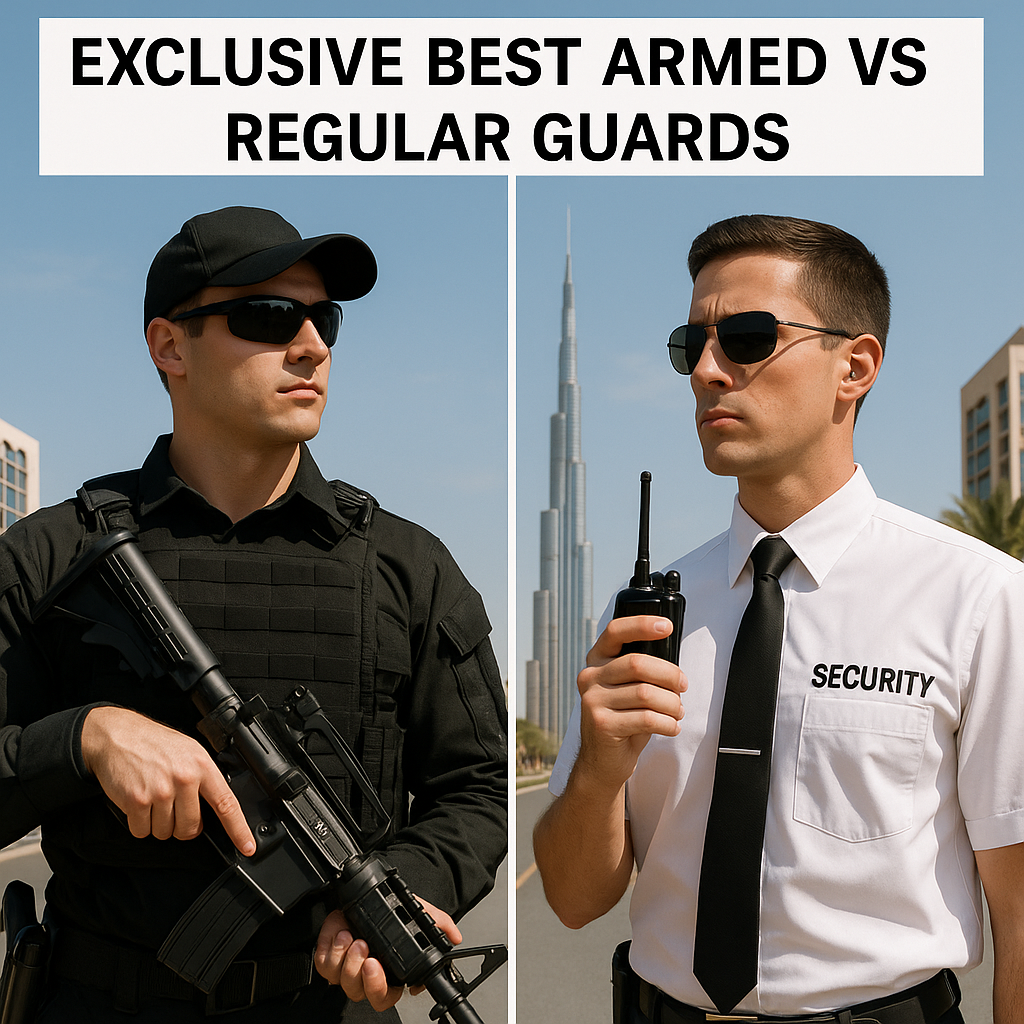
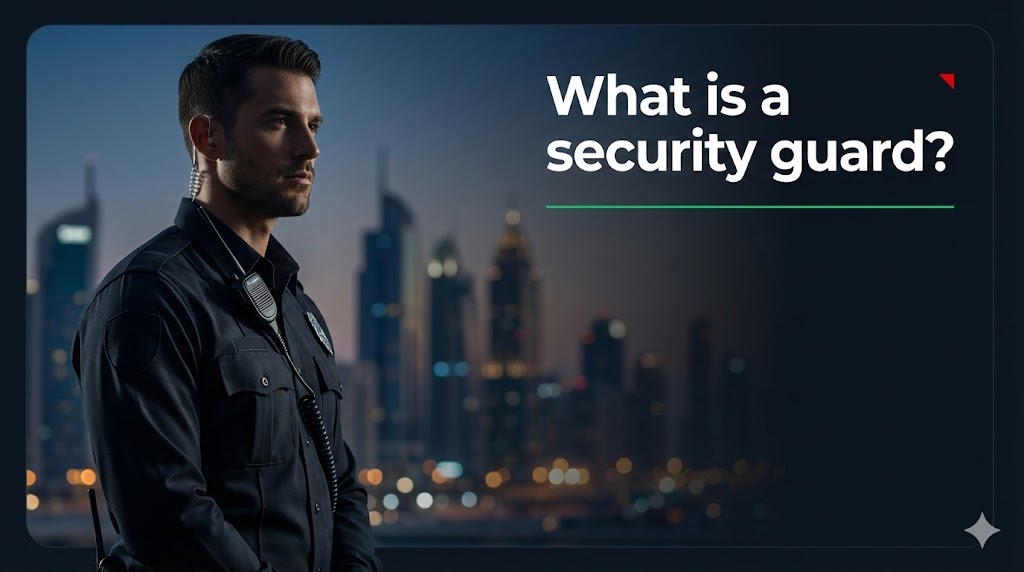
Regular security services rely on unarmed guards. They protect people, property, and events using access control, surveillance, patrols, and clear procedures. Their main tools are presence, communication, and early intervention, not weapons.
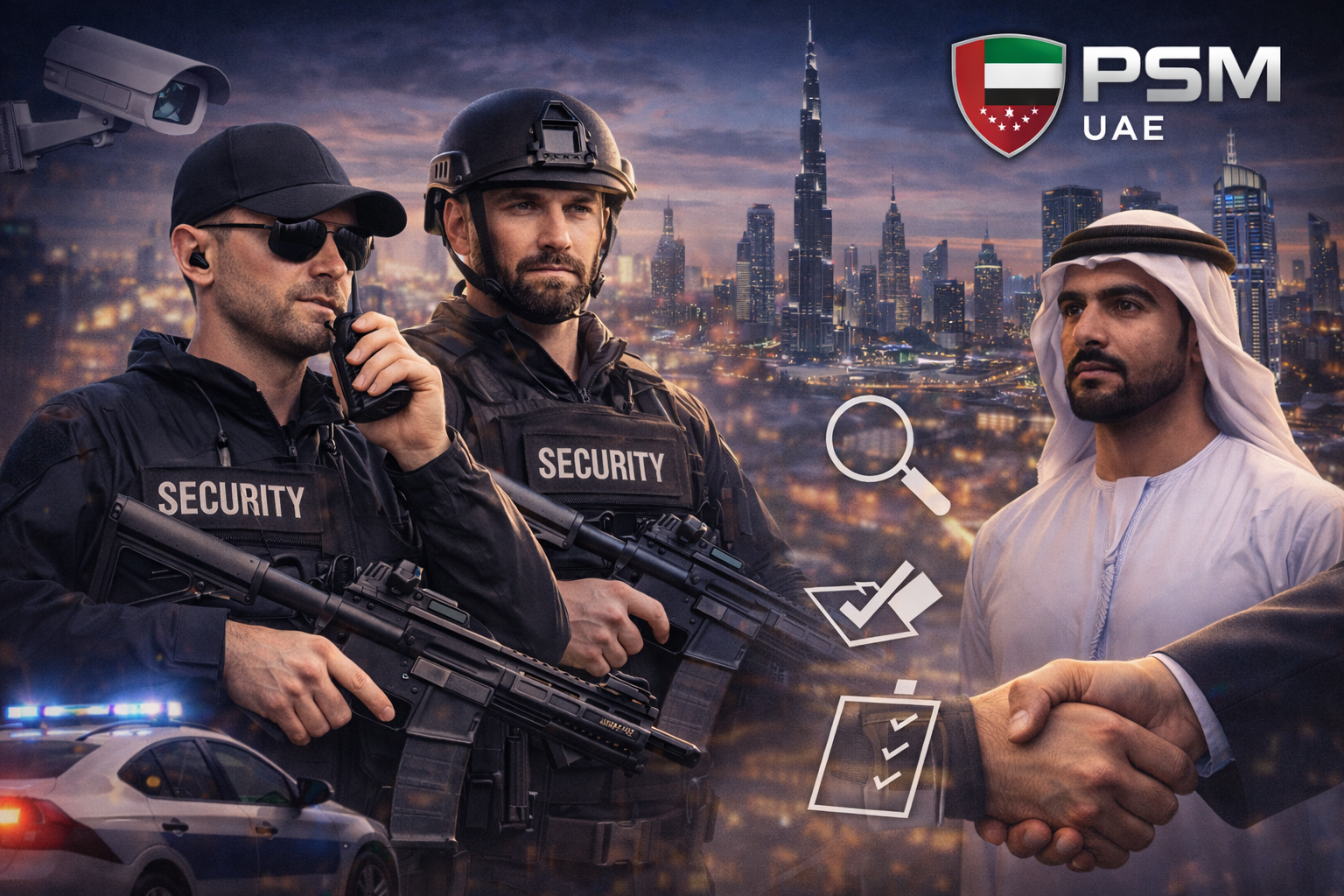
Armed security in Dubai adds legally issued firearms and advanced training on top of these duties. Armed guards are approved by authorities to carry weapons under strict rules and for specific high-risk protection tasks.
Both models work, but they serve different risk profiles. A small office lobby does not face the same threats as a cash logistics hub or VIP convoy.
Scope of Regular Security Services in Dubai
Regular security services form the base layer of security in Dubai. Most malls, office towers, residential communities, and schools rely on trained unarmed guards day to day.
Core Functions of Regular Security Guards
Unarmed guards cover a wide set of routine tasks that keep sites safe, organised, and compliant.
- Guarding and patrols: Foot and vehicle patrols, perimeter checks, and presence in visible areas.
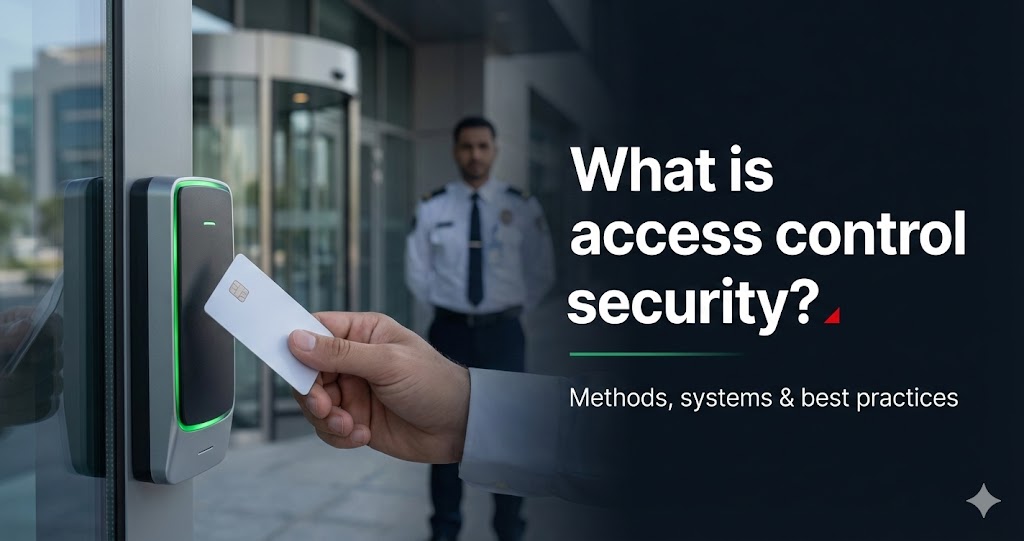
- Access control: Verifying IDs, visitor passes, deliveries, and controlling entry/exit points.
- Monitoring systems: Watching CCTV, alarms, and control room dashboards.
- Incident reporting: Recording and escalating suspicious activity, policy breaches, or minor disputes.
- Customer interface: Giving directions, answering questions, and guiding visitors during emergencies.
Picture a guard in a Dubai business tower lobby. They scan visitor QR codes, keep queues orderly, watch the CCTV feed, and alert building management if someone leaves a briefcase unattended. No weapon is needed for these daily tasks, but training, attention, and communication skills are crucial.
Where Regular Security Is Usually Enough
For many organisations, unarmed security covers their actual risk level. The focus stays on prevention and fast coordination with local police when needed.
- Corporate offices and SMEs: Low physical cash on site, lower threat of violent crime.
- Retail stores and malls: Theft prevention, crowd control, and emergency response, with strong CCTV coverage.
- Residential communities: Visitor checks, gate control, and patrols around common areas.
- Schools and training centres: Access control and safeguarding, with strict policies on weapons.
- Standard events and exhibitions: Queue management, bag checks, and coordination with on-site police if required.
In these settings, the presence of armed security could feel excessive or even cause discomfort for staff and visitors, unless a specific threat justifies it.
What Armed Security Adds On Top of Regular Services
Armed security services in UAE add another layer, intended for clearly defined high-risk scenarios. The change is not just the firearm. It is a full system of licensing, training, and procedures structured around high-threat incidents.
Key Differences: Armed Security vs Unarmed Guards
The table below summarises the main differences between armed guard service in Dubai and regular security guards.
| Aspect | Regular (Unarmed) Security | Armed Security in Dubai |
|---|---|---|
| Primary role | Prevention, observation, access control | High-risk protection, immediate armed response |
| Tools | Radios, CCTV, access systems, barriers | Firearms, protective gear, specialised vehicles (case-by-case) |
| Training level | Guarding, customer service, basic emergency response | Advanced firearms use, high-stress decision-making, tactical response |
| Licensing | Standard SIRA/PSBD guard licence | Additional firearms licensing and approvals |
| Use of force | Verbal de-escalation, physical restraint when authorised | Escalation path includes armed response under strict legal limits |
| Typical sites | Offices, malls, residential, schools | Cash transit, critical infrastructure, high-threat VIPs |
Both categories share the same base duties: protect life and property. Armed security simply operates in a more demanding space, where response time and threat level leave less margin for error.
Deterrence Effect of Armed Security
Armed security services UAE act as a stronger visual and psychological barrier against serious crime. A planned armed robbery, for example, is less attractive if attackers know that trained, licensed armed guards are present and coordinated with local authorities.
Criminals often scan sites for the “easiest” target. A visible armed guard service in a Dubai cash-handling facility signals that any attempt will meet a fast, controlled response. This effect does not replace good procedures or technology, but it supports them.
Response in High-Risk Scenarios
Armed security in Dubai is meant for events where a violent threat is credible, not theoretical. The response focus changes from “observe and report” to “contain and protect”.
Example: A high-value jewellery transfer between a vault and a retail flagship store in Dubai. Regular guards can manage the shop floor, greet customers, and watch for shoplifting. Armed guards escort the transfer, scan for hostile surveillance, and move along pre-planned secure routes with backup on call.
When Armed Protection Is Necessary in the UAE
Not every business needs armed security. The starting point is a clear risk assessment. The real question is: what is at risk, and who might attack it?
High-Value Assets and Cash Handling
Sites with concentrated physical value may require armed protection, especially during movement from one location to another.
- Cash-in-transit operations and currency centres.
- Gold, jewellery, and precious metal storage.
- High-end watch boutiques with limited access points.
- Secure logistics hubs with bonded goods.
These environments attract more organised crime and often involve predictable routes and timings, which increases risk. Armed escort and armed site presence can close some of these exposure gaps.
High Threat Level to Individuals (VIPs)
VIP protection in Dubai often stays low profile, but the threat assessment may still justify armed guard service for high-risk protection. This is more common for:
- Government figures and diplomats with known political risk.
- Senior executives in sensitive sectors, such as energy or defence.
- High-net-worth individuals with public profiles and media exposure.
In such cases, armed security integrates with close protection teams, drivers, and advance site surveys for hotels, offices, and event venues.
Critical Infrastructure and Strategic Sites
Some facilities link directly to national security or economic stability. For these, standard guarding may not be enough, especially under raised threat levels.
Common examples include:
- Energy plants and pipelines.
- Ports, logistics corridors, and key transportation nodes.
- Data centres and sensitive communications hubs.
These sites often combine multiple layers of security: barriers, surveillance, cyber controls, unarmed guards for daily operations, and armed security for high-risk zones or escalation moments.
Events or Projects with Identified Security Alerts
Sometimes the need for armed security in Dubai is temporary. A specific event or period brings a higher threat level, after which risk drops again.
Examples include a controversial conference, a high-profile legal dispute, or a sensitive asset auction. For these, licensed armed security UAE businesses can request short-term deployments based on documented risk and regulator approvals.
How PSM UAE Arms Its Security Services
PSM UAE provides both regular and armed security in Dubai, with a clear separation between standard guarding tasks and high-risk protection operations. The armed side of the service follows strict UAE regulations and internal controls.
Licensing and Compliance for Armed Security
Armed security services UAE must operate under national laws and local authorities, including SIRA in Dubai and other relevant bodies. PSM UAE aligns its operations with these frameworks.
- Guards hold valid security licences and pass additional firearms qualification.
- Firearms are registered, stored, and issued under controlled processes.
- Use-of-force policies follow UAE law and internal protocols.
This structure reduces legal risk for client businesses and ensures that any armed response stays within clear rules, with accurate reporting and investigation if an incident occurs.
Training: Beyond Standard Guard Skills
Armed guard service in Dubai high risk protection requires more than marksmanship. PSM UAE focuses on decision-making, discipline, and communication under pressure.
Armed security staff receive additional preparation in:
- Firearms safety and handling: Safe carry, storage, and use, with no compromise.
- Scenario-based drills: Simulated attacks on convoys, attempted armed robbery, or aggressive intruders.
- Coordination with police and emergency services: Clear communication channels and reporting under stress.
- De-escalation with a weapon present: Avoiding unnecessary use of force while maintaining control.
- Legal awareness: Boundaries of action, evidence preservation, and documentation.
The goal is simple: if an armed guard needs to act, they act lawfully, proportionately, and in sync with the wider security plan.
Integration With Regular Security and Technology
On high-risk sites, PSM UAE does not treat armed guards as a stand-alone solution. Armed security integrates into a full security design that may include unarmed guards, control room operators, and electronic systems.
For example, in a cash logistics facility:
- Regular guards manage staff entry and visitor registration.
- CCTV and alarm systems track vehicle bays and vault doors.
- Armed guards focus on secure areas and vehicle movements.
Each role has clear boundaries, which helps avoid confusion in fast-moving situations and keeps decision lines short and practical.
How to Decide: When to Hire Armed Security in the UAE
Choosing between regular security and armed security in Dubai should never rely on guesswork or fear. A structured review of risk, value, and exposure makes the decision clearer.
Key Questions for UAE Businesses
Security managers and owners can use a short checklist as a starting point before reaching out for expert support.
- Are we handling large amounts of cash, high-value goods, or sensitive materials?
- Has there been a credible threat or incident history linked to our sector or brand?
- Would a security breach here have serious safety or reputational impact?
- Do we move high-value assets between sites on fixed routes or schedules?
- Are we responsible for VIPs with known security exposure?
If several answers are “yes”, it is time to consider licensed armed security UAE options and compare them against improved unarmed measures, such as access upgrades or more advanced surveillance.
Matching Security Type to Real Risk
Security in Dubai ranges from discreet lobby guards to highly trained armed teams protecting critical assets. Regular security services handle the bulk of daily risk. Armed security steps in where the stakes and threats are higher.
The right choice depends on a clear view of your assets, your exposure, and your duty of care. Over-securing can create cost and tension. Under-securing can leave serious gaps.
PSM UAE supports businesses in this decision with practical assessments and a clear explanation of the difference between regular guards and armed protection in real scenarios. For a review of your current security setup and guidance on whether armed security is justified for your site or operations, contact PSM UAE and speak with a security specialist familiar with Dubai and wider UAE regulations.